Structural Properties Laboratory now open at INL

May 21, 2026, 3:35PMNuclear News
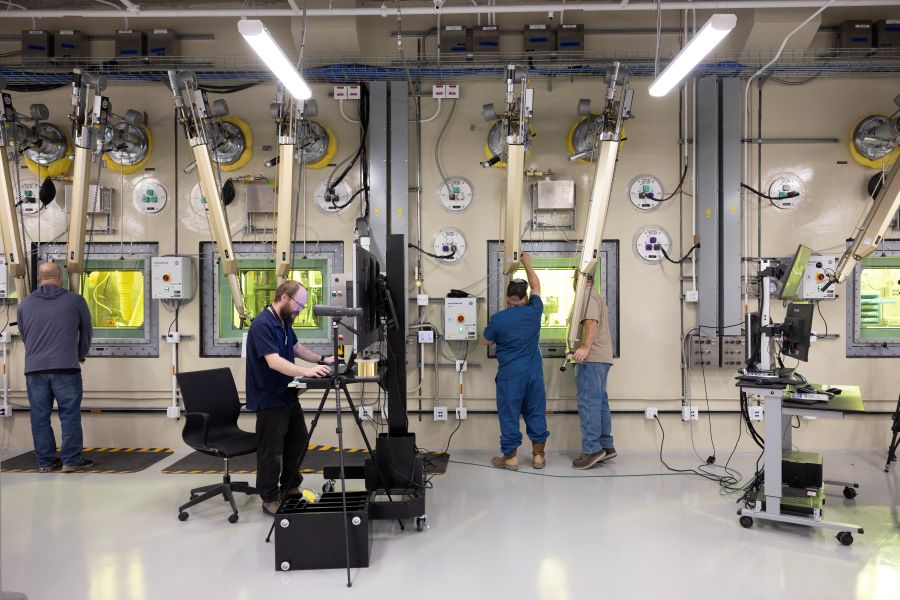
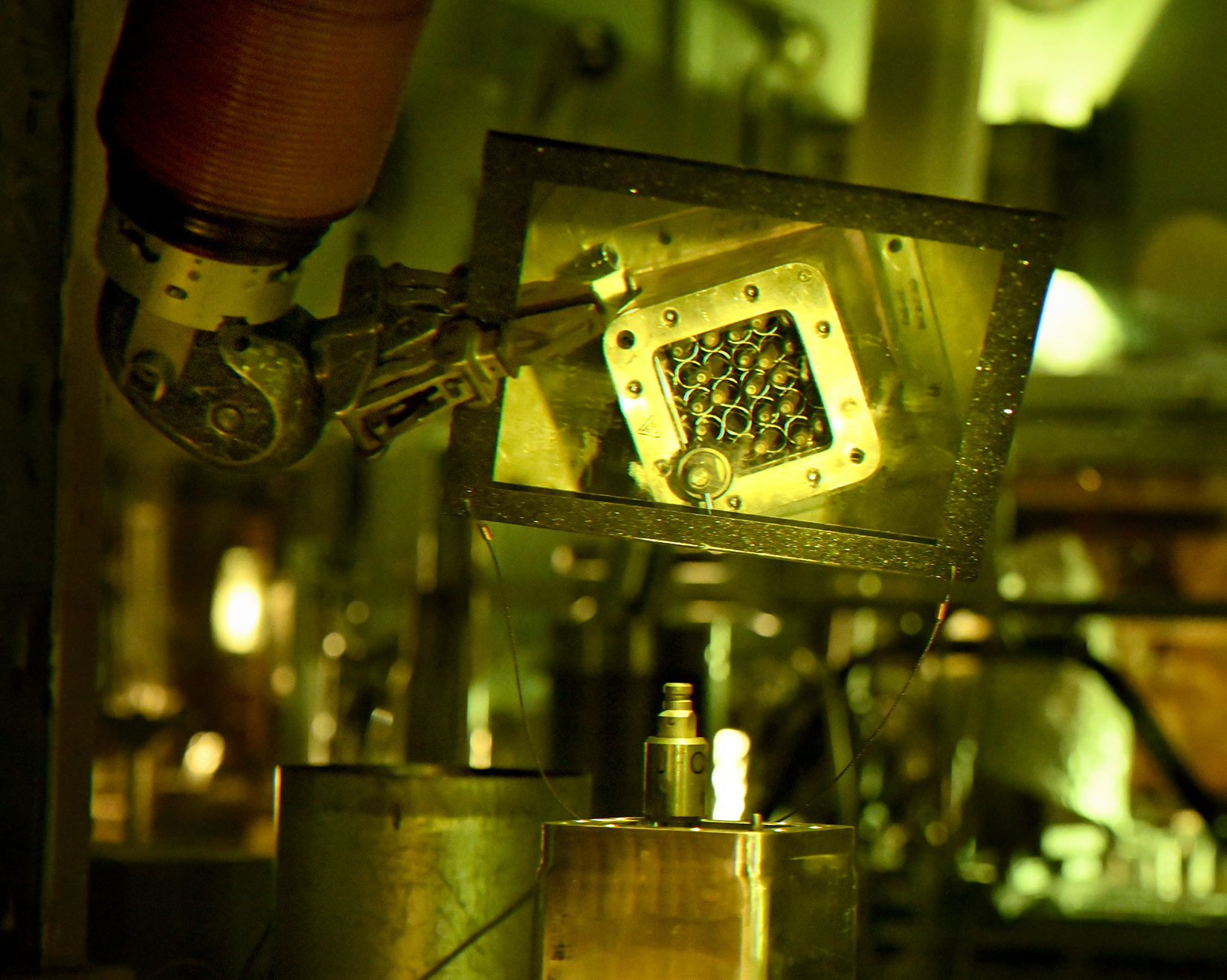
The SPL’s hot cell, seen here, has both manually operated and robotic manipulators for the safe handling of irradiated material. (Photo: INL)

Earlier this week, Idaho National Laboratory announced that its Structural Properties Laboratory (SPL) has been fully operational since January. Located at INL’s Materials and Fuels Complex, the SPL houses the lab’s first new hot cell in 50 years.

Researchers use one-of-a-kind expertise and capabilities to test fuels of tomorrow

May 26, 2025, 9:50AMUpdated October 17, 2025, 4:55PMNuclear NewsCory Hatch
Commercial nuclear fuel rods being unloaded from cask inside a HFEF hot cell. (Photo: INL)

At the Idaho National Laboratory Hot Fuel Examination Facility, containment box operator Jake Maupin moves a manipulator arm into position around a pencil-thin nuclear fuel rod. He is preparing for a procedure that he and his colleagues have practiced repeatedly in anticipation of this moment in the hot cell.

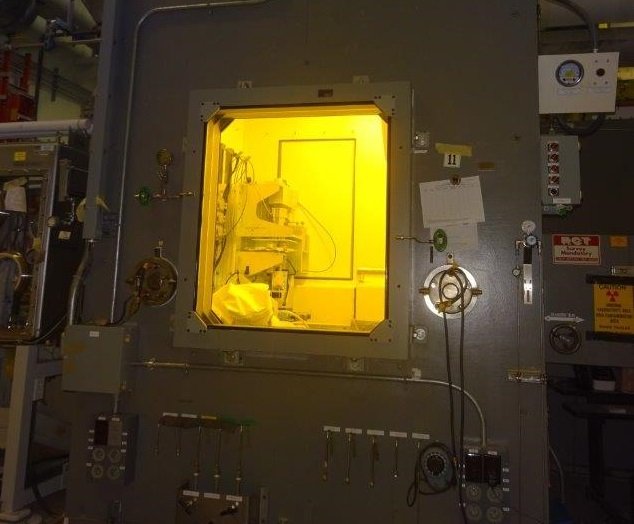
Hot cell window replacements completed at Hanford lab

November 8, 2024, 9:30AMRadwaste Solutions

Workers recently completed an 18-month project replacing 11 hot cell windows at the 222-S Laboratory at the Department of Energy’s Hanford Site in Washington state. Hanford contractor Navarro-ATL manages the lab.

Cintichem’s research reactor and hot cell facility decommissioning

November 12, 2021, 4:35PMNuclear NewsThomas S. LaGuardia and Joseph E. Carignan

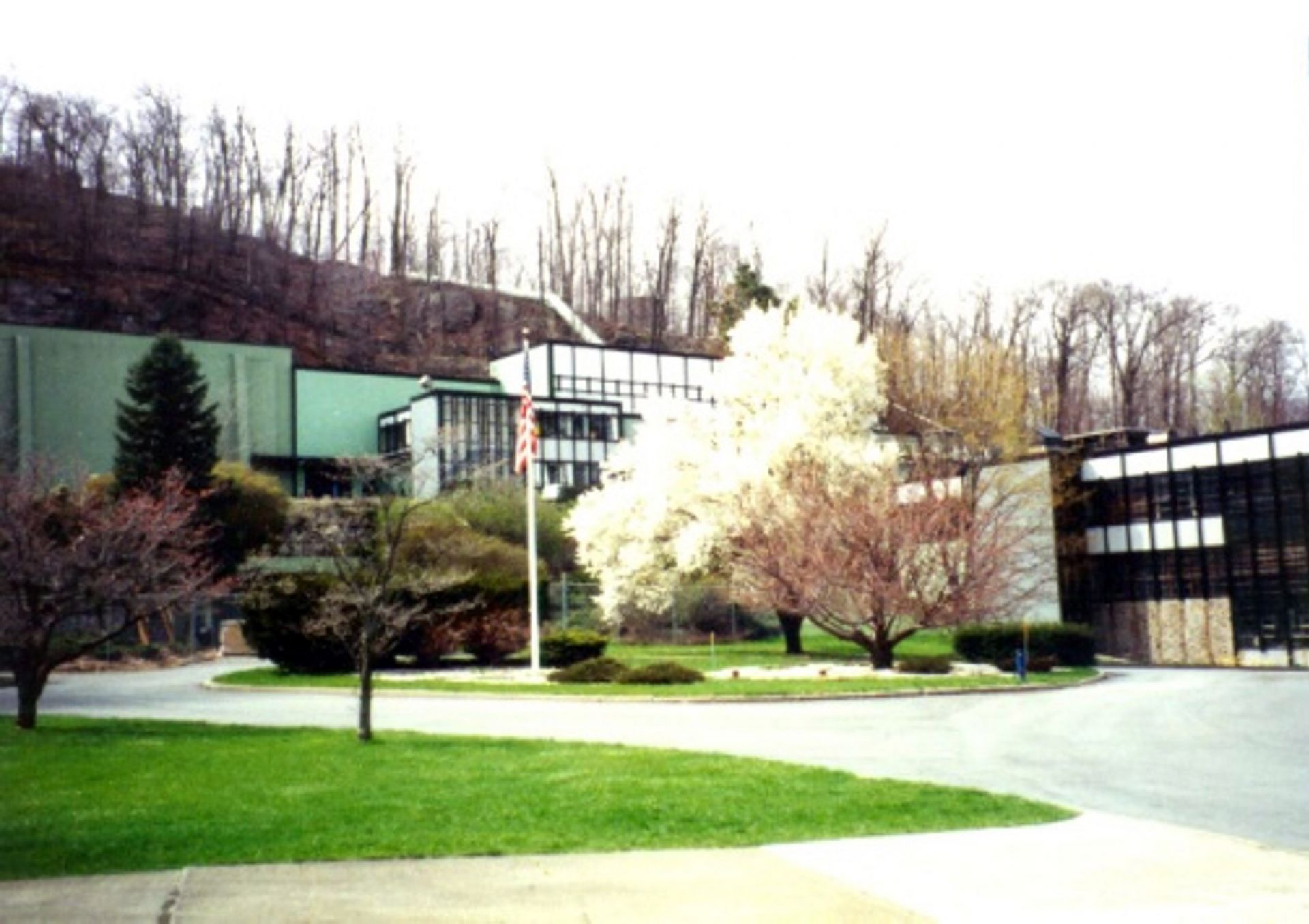
The Cintichem radioisotope production facility was located in Tuxedo, N.Y., 60 miles northwest of New York City, on a 100-acre site in the Sterling Forest Industrial Park. The facility was owned and operated by Union Carbide Corporation until 1984, when it was sold to Hoffman-LaRoche, a large pharmaceutical company.

The facility consisted of a 5-MWt, pool-type research reactor and production facility, connected via a 12-foot-deep, water-filled transfer canal to a bank of five adjacent hot cells. The facility began operation in the early 1960s, producing neutron-irradiated, enriched uranium target capsules. The fuel was 93 percent high-enriched uranium.